
Self vs About.me: Give Your Introduction Some Substance
Self turns your resume into a polished career website with experience and project evidence together. About.me centers on your profile. Give the person reading your introduction enough substance to understand your work.

Javier Martínez Samblas
Founder of Self · AI-powered resume-to-website platform
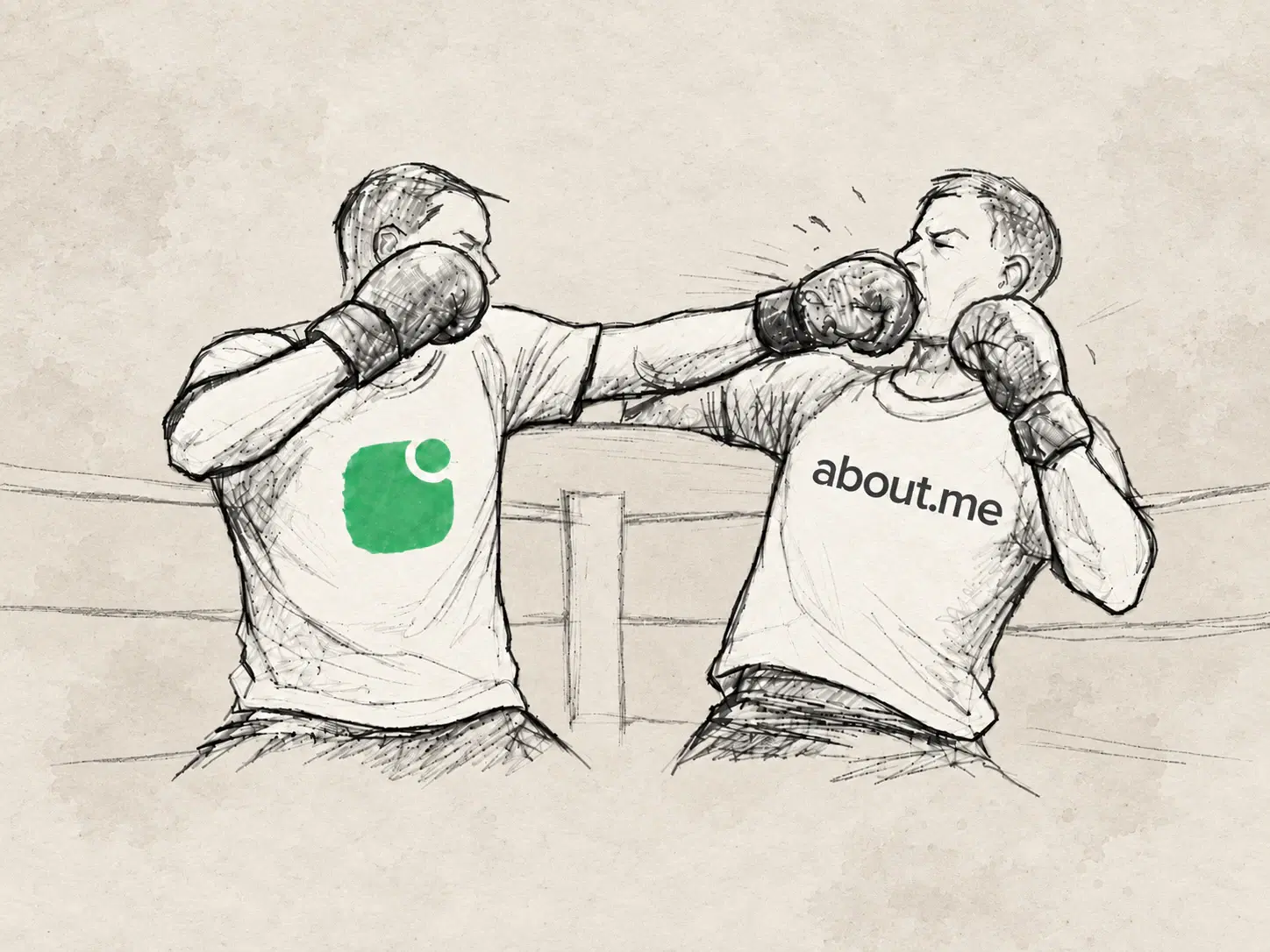
A short bio can tell people what you call yourself. A career website can show why they should take you seriously. Self brings your experience and selected projects into a polished presentation, giving the introduction substance from the first visit.
Self vs About.me at a glance
Starting point
Self
Existing resume or portfolio
About.me
Personal profile setup
Main emphasis
Self
Career history and selected work
About.me
Personal profile and AI twin
Presentation
Self
Curated professional website designs
About.me
Profile page and optional media
Reason to choose
Self
Explain your experience through evidence
About.me
Share a personal introduction
| Decision point | Self | About.me |
|---|---|---|
| Starting point | Existing resume or portfolio | Personal profile setup |
| Main emphasis | Career history and selected work | Personal profile and AI twin |
| Presentation | Curated professional website designs | Profile page and optional media |
| Reason to choose | Explain your experience through evidence | Share a personal introduction |
The bio should open the story
About.me offers a personal profile and promotes an AI twin, with gallery or video features on eligible plans. A profile can introduce you. For a professional decision, the reader also needs to understand the experience and work behind that introduction.
Calling yourself a strategist, designer, or consultant does not explain your scope. Which problems have you handled? What was your role? Where can someone inspect the result? Our view: the page should answer those questions as part of the introduction, with evidence close to the claims.
Self turns the resume into professional depth
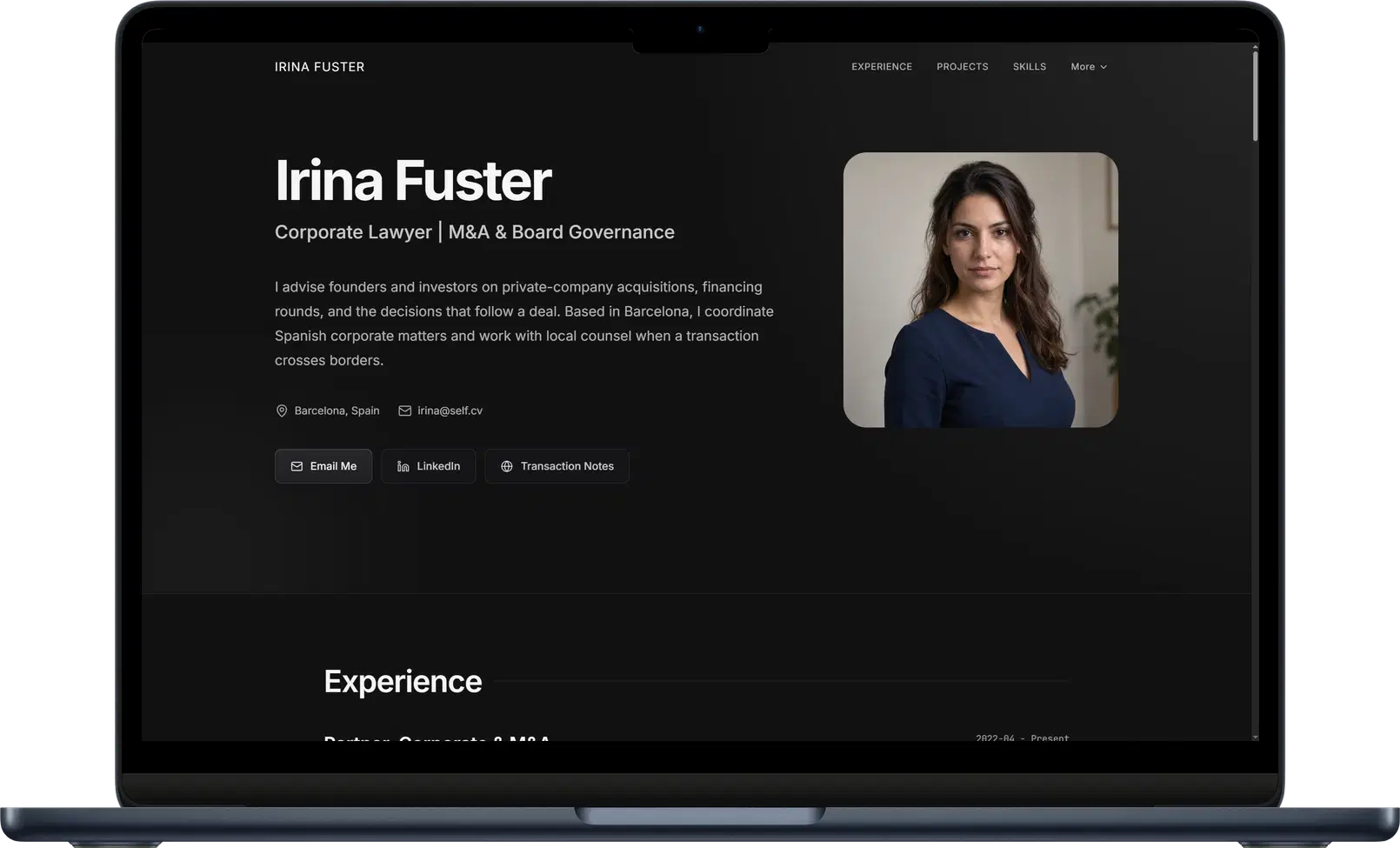
Upload your resume, portfolio, or career notes to Self. The generated sections give your work history and skills a structure you can review. Add selected projects with descriptions, images, video, and links. The reader gets the background and something concrete to explore.
For a consultant, a project could describe an engagement, the work delivered, and your responsibility. For a designer, it could pair the final visuals with the decisions you owned. You decide which examples support the work you want next; Self presents them beside the relevant experience.
See the personal website builder or explore the portfolio website builder to plan that presentation.
Make the whole page feel considered
Charcoal gives a professional profile a confident, restrained style. Editorial creates room for a more developed introduction and selected work. A curated template ties the sections together through typography, spacing, and a clear hierarchy.
Browse the template examples to see the difference a complete presentation makes. The finished website is hosted and responsive, ready for a link in your email signature or professional bio.
That link can do more than announce that you exist. It can explain what you have done, show the work, and make it clear how to contact you. Those are practical reasons to give the career its own page.
Verdict: choose Self when the introduction needs to convince
Choose Self for a professional website that puts substance behind your name. Start with the career material you already have and give people a designed page they can use to understand your work.
Turn your resume into a website with Self.
Self vs About.me: common questions
Is Self useful if I already have an About.me page? Yes. You can use Self as the professional website that brings your career history and selected projects together, and link to it from an existing profile.
Can Self include a short bio and a full career history? Yes. Your introduction can stay concise while the experience and project sections provide detail. Choose what supports the professional story you want to share.
Can I keep my Self page online for free? Yes. One hosted page can stay live on a self.cv address with Self branding and no search indexing. Pro and Team add all templates, custom domains, analytics, and search visibility controls.